







AI risk management for crypto traders is changing how traders identify potential losses, monitor market conditions and manage their exposure. In a market where prices can move sharply within minutes, spotting risks early can make a meaningful difference to how a trading strategy performs.
Most traders spend considerable time looking for profitable entries. Far fewer give the same attention to what could go wrong after entering a trade. Yet even a strategy with a high win rate can lose money if position sizes are excessive, stop-losses are poorly planned or several trades are exposed to the same market movement.
AI offers new ways to address these challenges. It can analyze large amounts of market data, monitor positions, identify unusual patterns and help traders evaluate potential losses. However, it isn’t a substitute for sound risk management. Its usefulness depends on the quality of its data, the design of its models and how traders act on its findings.
Here’s how AI can make crypto trading risk management more systematic.
1. How AI Helps Traders Spot Risk Earlier
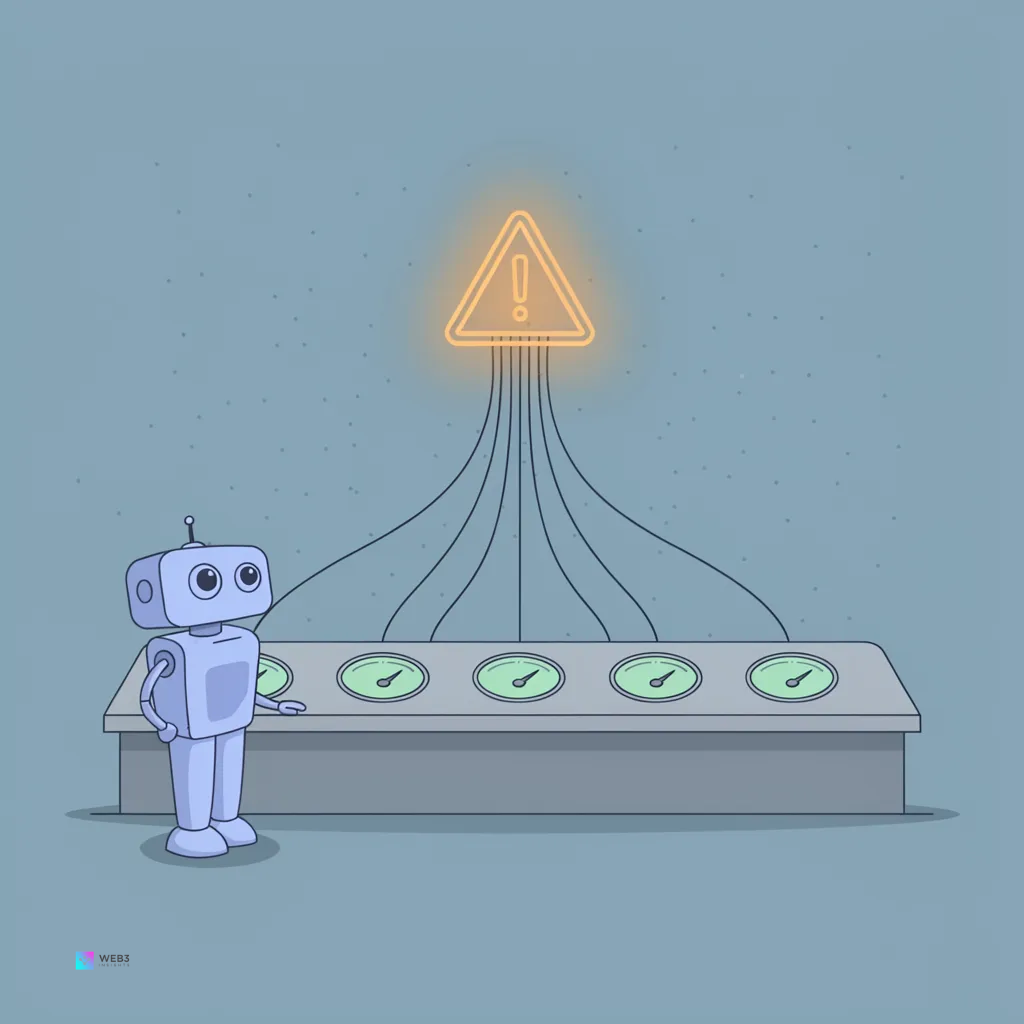
Crypto markets generate enormous amounts of information, from price movements and trading volumes to funding rates, open interest and on-chain activity. Monitoring all these signals manually can be difficult, especially when several markets are moving simultaneously.
AI can process multiple data sources and identify patterns that may indicate rising risk.
For example, an AI-powered monitoring system might detect a sudden increase in volatility alongside declining liquidity. Individually, these signals may not seem unusual. Together, they could indicate that executing a large position has become more difficult or that prices may move more abruptly.
AI can also help traders monitor:
- Volatility spikes: Unusually large price movements that may increase the risk of sudden losses.
- Liquidity deterioration: Changes in market depth that could make entering or exiting a position more expensive.
- Funding-rate imbalances: Extreme funding rates that may signal crowded positioning in perpetual futures markets.
- Open interest changes: Rapid increases or decreases that can provide context about derivatives market activity.
- Unusual trading activity: Sudden changes in volume or other measurable market behaviour.
The value of AI here is its ability to combine signals and monitor them continuously, provided the system has access to reliable, sufficiently current data.
However, identifying a potential risk is different from predicting what happens next. A volatility spike, for instance, doesn’t automatically mean prices will reverse. AI should help traders investigate changing conditions rather than encourage them to treat every alert as a trading signal.
2. Using AI to Calculate Position Size and Exposure
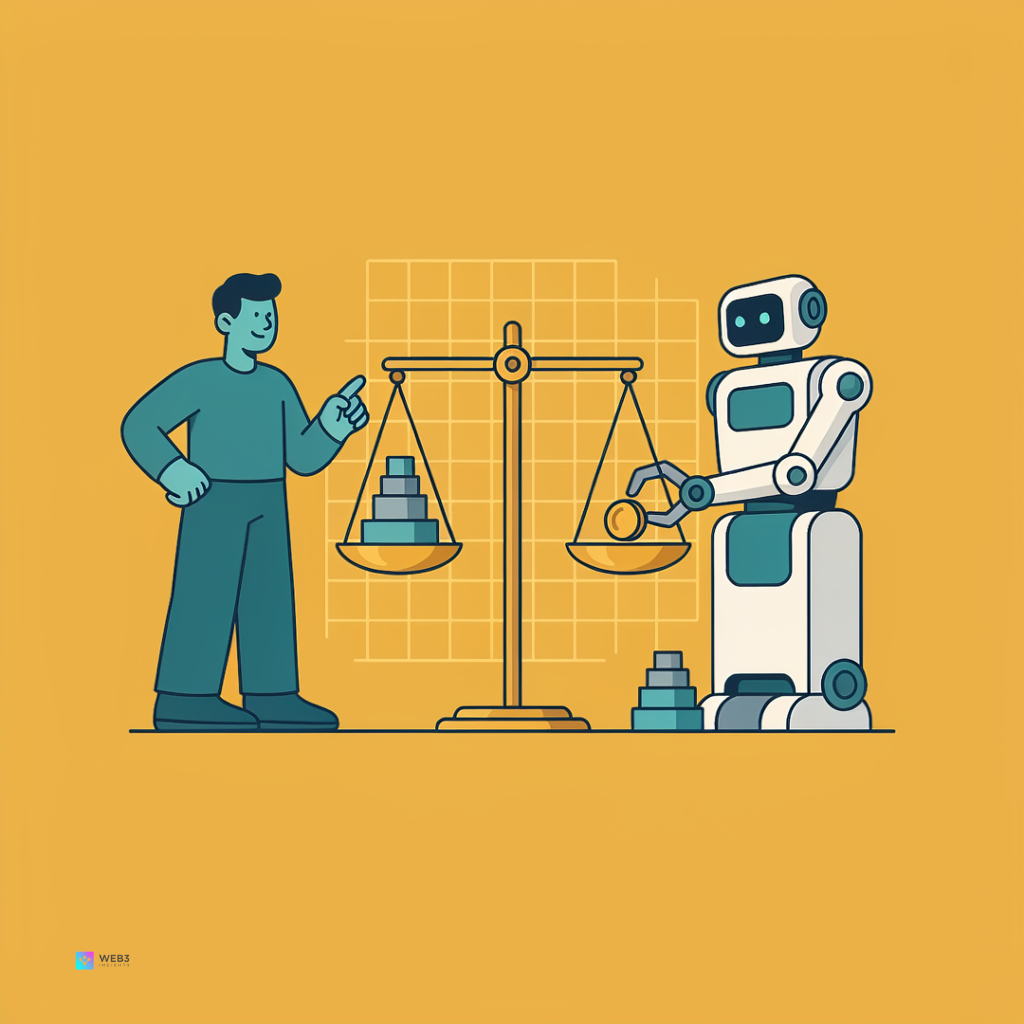
Position sizing is one of the most important parts of trading risk management. Even a well-researched trade can produce a disproportionately large loss if the position is too big.
AI can help traders make position sizing more systematic by combining account equity, stop-loss distance, volatility and predefined risk limits.
Consider a hypothetical trader with a $10,000 account who has established a maximum planned loss of 1% on a trade. That gives the trade a $100 risk budget.
If the distance between the entry price and the stop-loss is 2%, a simplified calculation would be:
Position size = Risk budget ÷ Stop-loss percentage
In this example:
$100 ÷ 0.02 = $5,000
The resulting position has a notional value of $5,000, assuming a straightforward spot trade and ignoring fees, slippage and other execution costs.
An AI-assisted tool could perform this calculation across multiple scenarios, helping traders understand how changes in volatility or stop-loss distance affect their exposure.
It can also help monitor risks that aren’t obvious when trades are considered individually:
- Total exposure: How much capital is exposed across open positions.
- Correlated positions: Whether several trades depend on the same underlying market movement.
- Leverage exposure: How borrowing magnifies potential losses and increases liquidation risk.
- Drawdown: How much an account has declined from its previous peak.
For example, holding BTC, ETH and several other large-cap cryptocurrencies may appear diversified. However, if these assets move together during a market sell-off, the positions may collectively carry much more risk than their individual sizes suggest.
AI can help identify these overlaps and model possible losses across a group of positions.
Still, position-sizing calculations are only as useful as their assumptions. A stop-loss order doesn’t guarantee an exit at its specified price, and leverage can introduce additional costs and liquidation risks. Traders should account for these limitations rather than rely on an AI-generated position size alone.
3. AI for Stop-Losses, Volatility and Changing Market Conditions
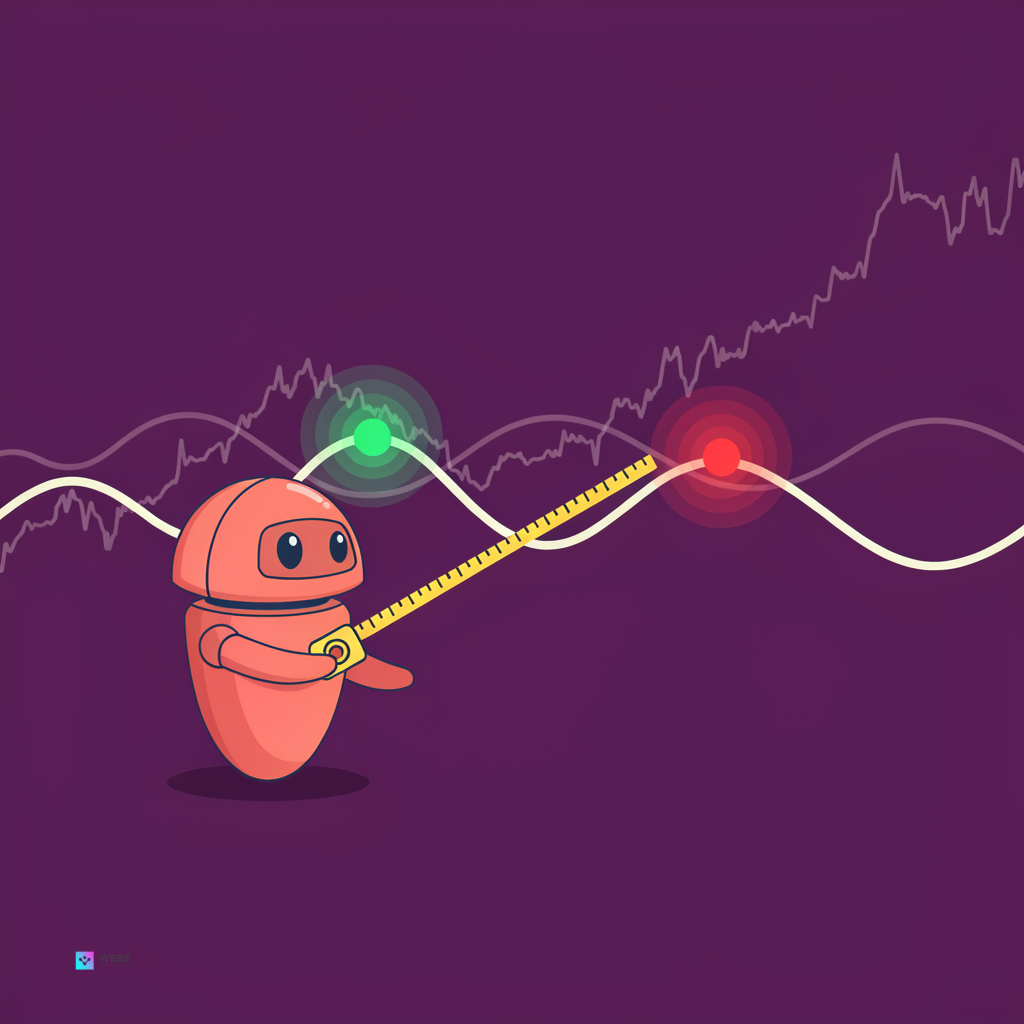
A stop-loss is designed to limit the loss on a trade when the market moves against the original thesis. But choosing where to place one isn’t always straightforward.
A stop that’s too tight may be triggered by ordinary market noise. A stop that’s too wide may expose the trader to a loss that exceeds their intended risk.
AI can help traders evaluate stop-loss placement by analyzing historical volatility, recent price behaviour and different market scenarios.
For example, a volatility-aware system could compare recent average price movements with the distance to a proposed stop-loss. It could then highlight whether that distance is unusually narrow or wide relative to current conditions.
This doesn’t mean AI can identify the perfect stop-loss. Rather, it can help traders understand the trade-offs involved.
AI can also support ongoing risk monitoring. A trading strategy that performs under relatively stable conditions may behave differently when volatility increases, liquidity falls or market correlations change.
An AI-powered monitoring system could flag situations such as:
- Volatility rising beyond a predefined threshold.
- A position approaching its liquidation price.
- A sudden increase in estimated execution costs.
- A strategy experiencing a larger-than-expected drawdown.
- Market conditions moving outside the range used to test a strategy.
Some automated trading platforms also allow traders to connect alerts to predefined actions. However, not every AI tool can modify stop-losses or execute trades. Those capabilities depend on the platform, account permissions and configuration.
For traders using automation, testing these rules in a simulated environment before allowing them to affect live positions is essential.
4. Detecting Unusual Activity and Operational Risks
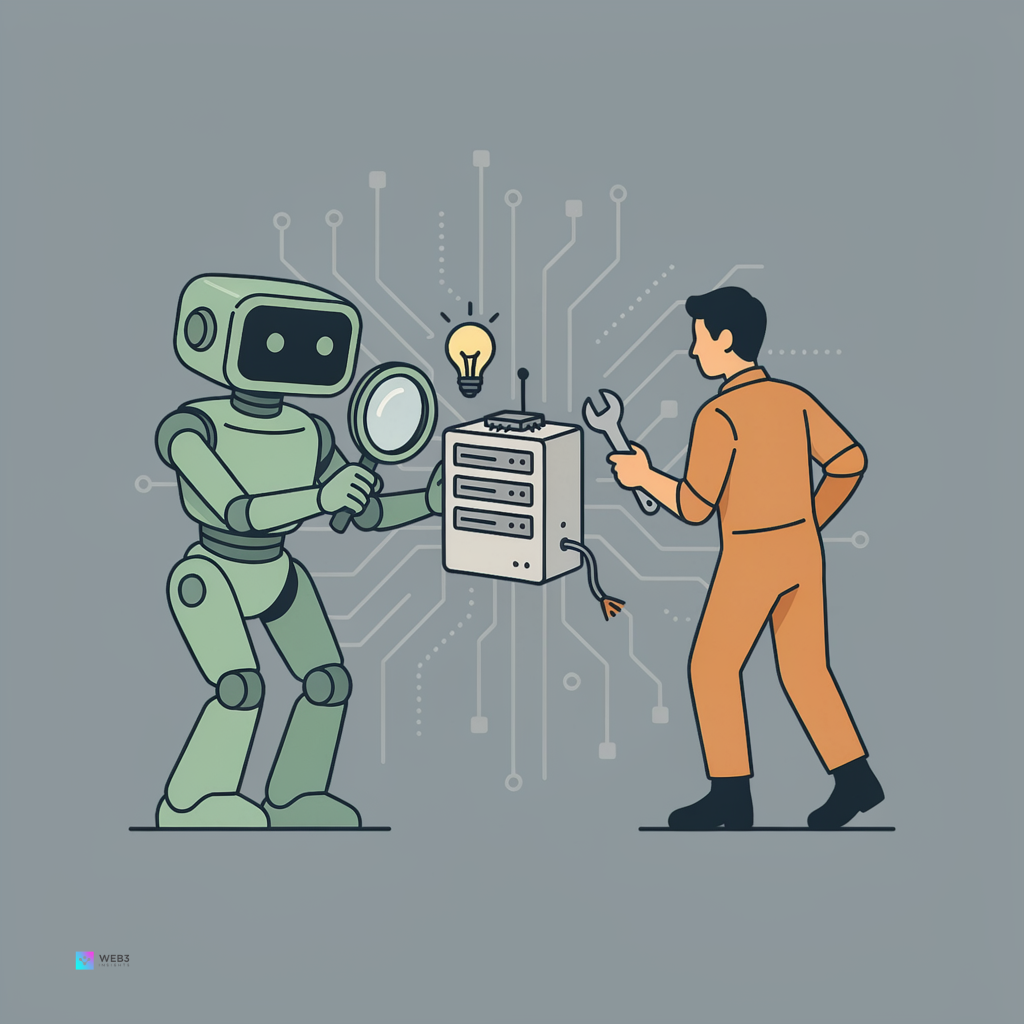
Not every trading loss begins with a bad market prediction. Some losses arise from operational problems, including exchange outages, API failures, unexpected fees and security incidents.
AI can help monitor certain operational risks, particularly when connected to reliable exchange, account or infrastructure data.
For instance, a monitoring system could flag an API connection that repeatedly fails, an unexpected change in account balances or a trading bot that stops responding. Depending on its integrations, it may also detect discrepancies between submitted orders and reported execution results.
Other areas where automated monitoring can be useful include:
- Exchange reliability: Identifying unusual downtime or repeated order failures.
- Execution discrepancies: Flagging differences between intended and actual order execution.
- Fee monitoring: Tracking unexpected trading costs that can gradually erode returns.
- Bot behaviour: Detecting repeated orders, unexpected position changes or activity outside configured limits.
- Security monitoring: Highlighting unusual account activity when the system has access to appropriate security alerts.
AI can also help traders conduct stress tests by examining how a strategy might behave under hypothetical conditions, such as a sharp price decline, a sudden increase in spreads or a prolonged exchange outage.
These scenarios can expose weaknesses that ordinary backtesting might overlook.
However, AI monitoring isn’t a replacement for basic account security. Traders should use strong authentication, carefully manage API permissions and avoid giving trading systems unnecessary withdrawal access. Operational safeguards should work independently of AI wherever possible.
5. Where AI Risk Management Can Go Wrong
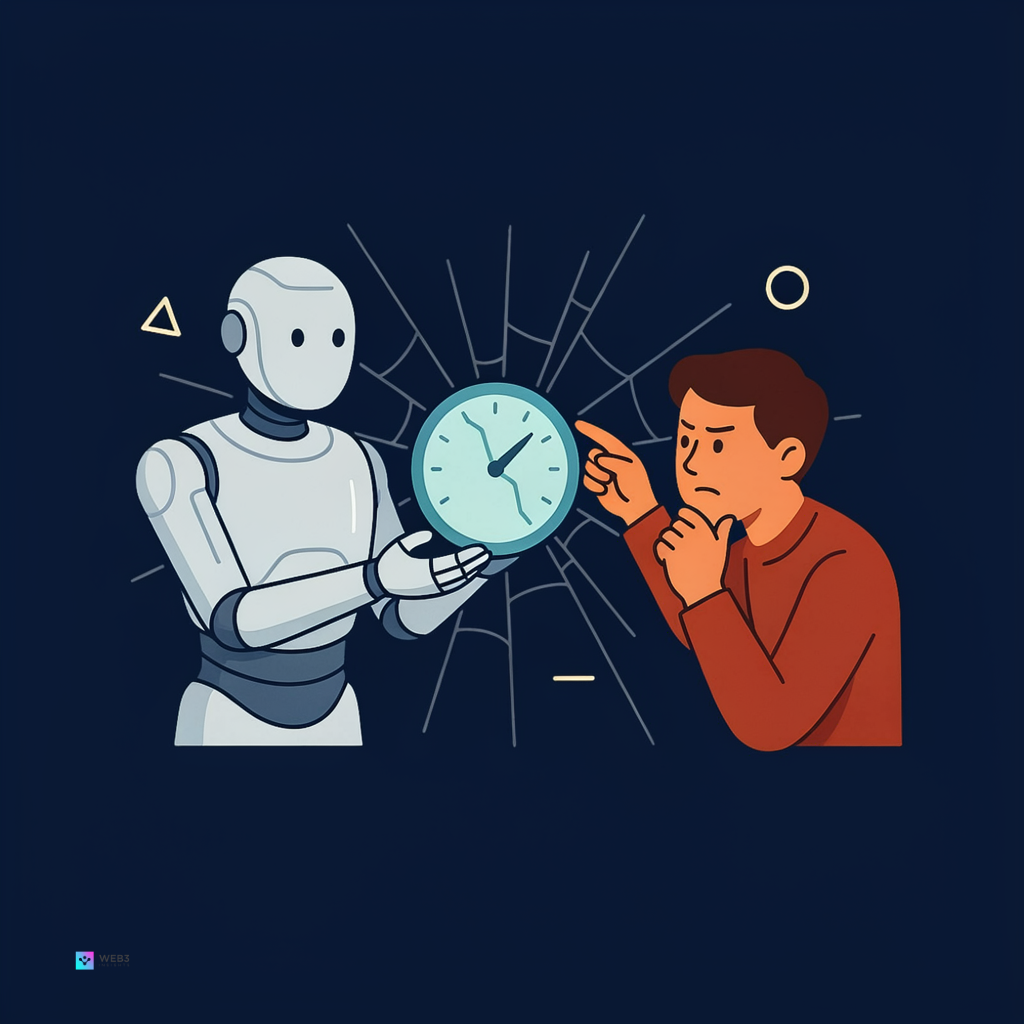
AI can make risk monitoring faster and more consistent, but it introduces its own limitations. Treating its output as unquestionably accurate can create a false sense of security.
One major problem is unreliable or incomplete data. An AI system analyzing delayed prices, inaccurate order-book information or missing exchange data may produce misleading assessments. Even sophisticated models cannot reliably compensate for every data-quality problem.
Another challenge is changing market conditions. A model trained on historical data may perform poorly when market behaviour changes significantly. A strategy that appeared stable during one market regime may encounter unexpected losses during another.
There are also practical limitations to consider:
- False alerts: Systems may flag harmless market movements as serious risks, leading to unnecessary interventions.
- Missed events: AI may fail to recognize unusual conditions, particularly those absent from its training data.
- Overfitting: Models may perform well on historical data but fail when applied to new market conditions.
- Execution gaps: A system may correctly identify a risk but be unable to execute an order at the expected price.
- Automation failures: Incorrect configurations or software problems can cause a trading system to behave unexpectedly.
There’s also the danger of confusing a model’s confidence with accuracy. An AI-generated risk score may look precise without accurately reflecting the true probability or size of a future loss.
Traders should therefore use AI alongside clear, independently defined risk limits. These might include maximum position sizes, daily loss limits, leverage restrictions and rules for disabling automated strategies when data or execution becomes unreliable.
Backtesting, paper trading and ongoing performance reviews can help reveal weaknesses before they become costly. Even then, no testing process can account for every possible market event.
Trader’s Take
AI is making crypto risk management more data-driven. Traders can use it to monitor volatility, assess position sizes, identify overlapping exposures and detect certain operational problems that are difficult to track manually.
But the real value isn’t in letting an algorithm make every decision. It’s in building a process that helps traders recognize risks earlier, evaluate potential losses more consistently and respond according to predefined rules.
The distinction matters. AI can estimate exposure, identify warning signs and test hypothetical scenarios, but it cannot eliminate uncertainty or guarantee that a stop-loss will execute as expected.
Ultimately, effective risk management still depends on having clear limits and following them. AI can strengthen that process, but protecting trading capital remains a responsibility that traders cannot outsource.